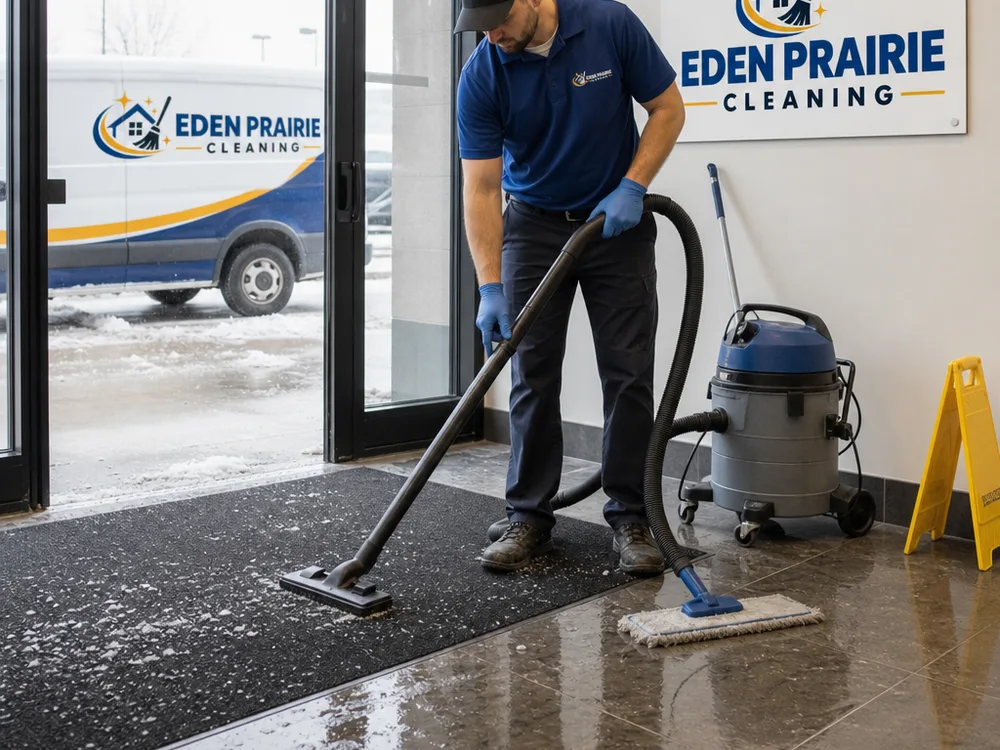
Technician cleaning commercial entry matting and a lobby floor affected by winter salt

Dealerships and service centers

Auto Dealership & Service Cleaning

One site holds two buildings with opposite standards: a showroom sold on reflections, and a service area where oil and tire residue look for a way into it.

✓Written scopes ✓Documented tasks ✓Flexible scheduling ✓Ongoing quality checks

Showroom and shop

The boundary between showroom and shop is the job

A dealership is a glass box attached to a workshop. On one side the standard is reflective: floors, glass, and vehicle presentation under bright lighting that reveals every smear. On the other it is industrial, with oil, coolant, brake dust, and tire residue as the normal condition rather than a spill.

Everything turns on the transition between them. Technicians, advisors, and customers cross it all day, and whatever is on the shop floor gets carried into the corridor, the lounge, and eventually onto the showroom floor. Controlling that crossing does more for a dealership's appearance than any amount of polishing.

  • Consistency: the same scope, the same standards, and documented tasks.
  • Practical scheduling: after-hours, early morning, or daytime touch-ups where appropriate.
  • Building-ready cleaning: methods and products suited for common office finishes like LVT, VCT, carpet tile, glass, stainless, and painted drywall.

Customer-facing space is also where sales actually happen, and it is occupied longer than most retail. Someone waiting on a service appointment sits in your lounge for an hour looking at the floor, the restroom, the coffee area, and the glass. Those spaces carry disproportionate weight for their size.

For a broader look at what we do across properties beyond office spaces, review our cleaning services in Eden Prairie.

Showroom and shop

The boundary between showroom and shop is the job

Showroom glass and polished floors

Large glass panels inside and out at reachable height, entry doors at hand level, and a showroom floor that holds a reflection under display lighting. Streaks and footprints are the whole game here, so method and drying matter more than product.

The transition from shop to showroom

Matting runs, the corridor between service and sales, the threshold at every connecting door, and the floor where technicians cross. Interrupting the path is what keeps tire black and oil film out of your customer space.

Service bays and shop floors

Bay floors with oil film and brake dust, drains, the areas around lifts and benches, and the walls that take overspray. We work to a boundary you set around equipment, parts, and vehicles, and we never move a vehicle or touch a lift.

Customer lounge and coffee area

Seating including arms and undersides, tables, the coffee and beverage station, the floor beneath the seating, children's area if you have one, and the glass looking into the shop. This room gets occupied for long stretches and judged closely.

Service drive and advisor desks

The service drive takes weather, exhaust residue, and the heaviest foot traffic on site, and advisor desks and counters carry the customer interaction. Both need daily attention, and the drive needs far more frequency in the salt months.

Parts counter, offices, and restrooms

The parts area has its own dust and packaging, sales offices and the finance room need an interview-ready standard, and customer restrooms take retail-level traffic. Each sits on its own frequency rather than a single site-wide pass.

Weather on a dealership site

Salt, slush, and a glass building full of light

Winter is harder on a dealership than almost any other building type. Vehicles come in loaded with salt and slush that melts onto the service drive and bay floors, leaving a white residue that spreads, and the same mix arrives on customer shoes into a showroom whose whole appeal is clean reflective surfaces.

Glass makes everything visible. A showroom wall of windows in low winter sun shows every streak, and spring pollen settles on exterior glass and lower panels within days of the first warm week. Frequency on glass and entry floors through those two seasons does more than anything else on the site.

We build your scope around how people move through the space:

  • Entry points: where dirt actually comes in, and what flooring is there.
  • Restroom utilization: number of stalls, number of users, and peak times.
  • Conference rooms: turnover frequency and reset needs.
  • Waste streams: landfill, recycling, and any special handling your building requires.

If you need Janitorial Eden Prairie service that stays consistent, the biggest improvement usually comes from tightening the scope so every cleaner knows exactly what “done” means for your suite.

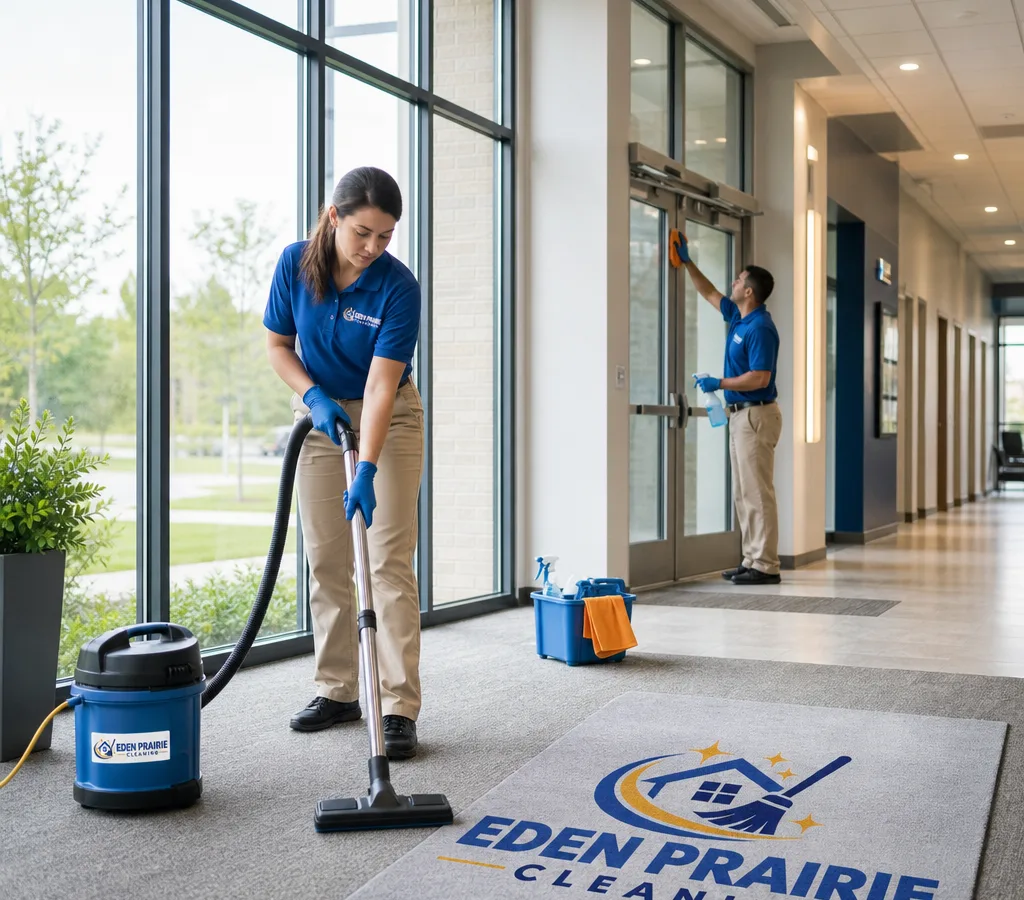
Professional cleaning in a modern Eden Prairie office lobby and corridor

Setting up the site

How we plan a dealership site

  1. 01

    Walk it as two buildings, then the join

    Showroom and customer areas as one survey, shop and service as another, then the transition points between them. That third survey is where the real plan comes from, because it decides matting, frequency, and the order of work.

  2. 02

    Set the boundary around vehicles and equipment

    Nothing on a lift, no vehicle interiors or exteriors unless specifically scoped, no parts, no tools, no moving anything. We write that down because ambiguity in a shop creates both damage risk and liability questions.

  3. 03

    Schedule around your trading hours

    Showroom and lounge work goes before open or after close, while the shop usually needs an after-hours slot once the bays are clear. We agree how evening and weekend hours change the plan, since dealership hours rarely match an office week.

  4. 04

    Review the showroom under its own lighting

    The result gets checked under display lighting at the hour customers arrive, not under work lights. That is the only view that matters for glass and floors, and it usually changes how much drying time the plan allows.

What a dealership quote weighs

How Much Does Dealership Cleaning Cost in Eden Prairie?

The inputs are showroom area and how much reachable glass it has, the number of service bays and the condition of their floors, lounge and office space, restroom fixture count, and how many days a week each area needs attention. Showroom and shop usually run on different frequencies, so they are priced as separate lines. We quote after walking both sides of the site.

Final pricing depends on square footage, number of restrooms, floor types such as carpet versus hard surface, breakroom needs, after-hours access requirements, and how much detail work you want each visit. Exact cost is confirmed after a walkthrough and written scope.

Dealership manager questions

Dealership managers ask about the shop side

Would anyone be cleaning around vehicles on lifts?+

No. Nothing raised on a lift is in our scope, and neither is anything inside, on, or attached to a vehicle unless you specifically scope it and agree it in writing. Our shop work is the floor, the drains, the open areas, walls, and waste, with a defined boundary around lifts, benches, tools, and parts. That line protects both of us.

Tire marks and oil end up in our showroom. How is that stopped?+

At the transition rather than in the showroom. The effective measures are longer matting runs on the shop side of every connecting door, frequent attention to the corridor between service and sales, and a daily pass on the threshold floor. Cleaning the showroom more often without interrupting the path just means cleaning the same marks again tomorrow.

Our showroom floor never looks right under the lights. Why?+

Usually drying and method rather than product. A polished or coated showroom floor shows every streak and footprint under display lighting, so it needs clean solution, frequent water changes, and enough drying time before anyone walks it. We check the result under your display lighting at opening time, because that is the only view your customers get.

Service runs late and Saturdays. Can the schedule handle that?+

Yes, as long as we build it around your actual hours instead of a standard week. Typically showroom and customer areas get done before open, and the shop gets a slot after the last bay clears, which may be a different hour on a Saturday. We confirm access, alarms, and who is on site for each pattern.

The customer lounge gets heavy use. What does it need?+

More frequency than its size suggests, and attention to the things people actually touch: seat arms and undersides, tables, the beverage station, and the glass into the shop. A lounge is occupied for an hour at a time by someone with nothing to do but look around, which is why it is judged harder than a sales floor.

Do you handle the exterior lot or vehicle washing?+

Vehicle washing and detailing are not ours, and we will not present them as such. Exterior work we can scope is limited to the areas people walk: entry zones, the service drive surface, the walkways, and reachable exterior glass. Lot sweeping and snow clearing are separate trades with their own equipment, and we would rather tell you that than take it on badly.

Walk the site with us

Want the shop to stop reaching your showroom?

Tell us your showroom size, how many bays you run, and your service hours. We will walk both sides of the site and the transition between them, then price the showroom and shop as the separate jobs they are.

Request a quote

Tell us about your space

Send the details and we will come back with a written scope and a clear plan.