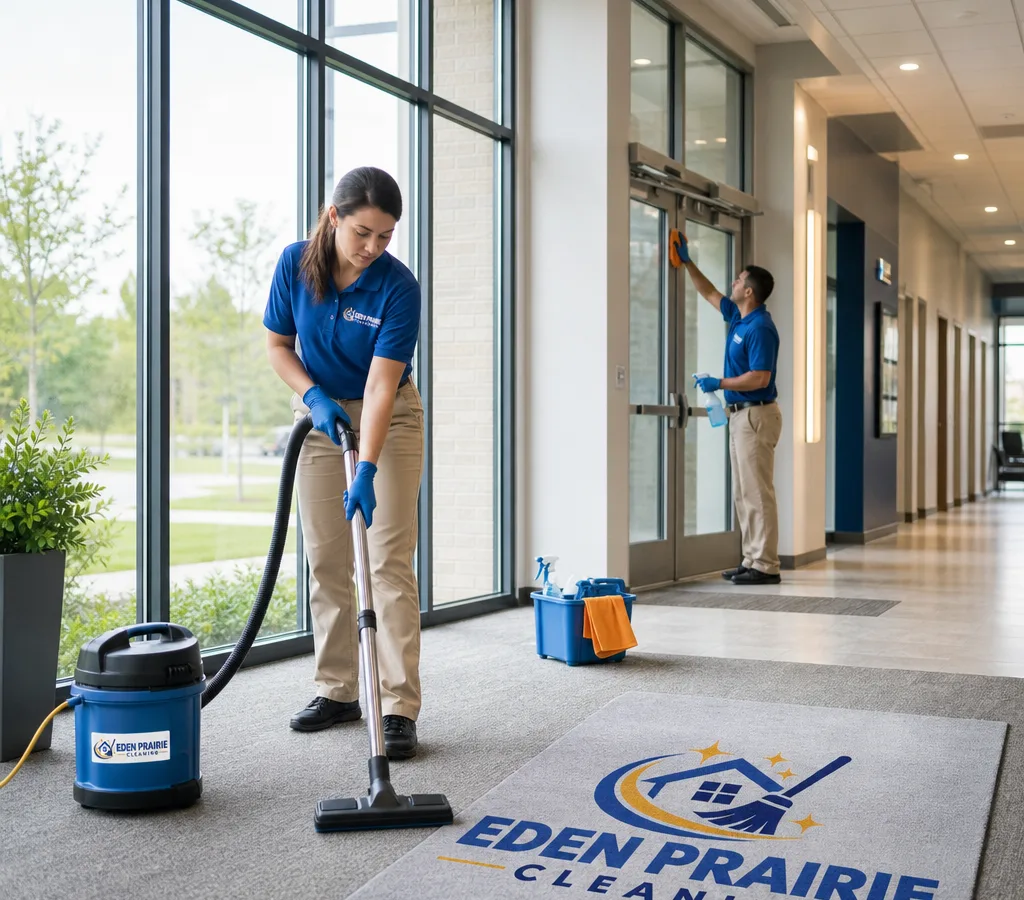
Professional cleaning in a modern Eden Prairie office lobby and corridor

Gyms and fitness studios

Gym & Fitness Studio Cleaning

A gym is a humid building full of shared handles. Odor and equipment contact points are what members actually judge, and the schedule has to fit between a 5am open and a 10pm close.

✓Written scopes ✓Documented tasks ✓Flexible scheduling ✓Ongoing quality checks

Sweat, humidity, contact

Odor is a cleaning problem with a physical cause

Members describe a gym as clean or not clean based almost entirely on smell and on how equipment handles feel. Both come from the same source: body oil and sweat absorbed into upholstery, grips, mats, and locker room surfaces, where it stays until something physically removes it.

That makes surface wiping insufficient on its own. The reservoirs are the ones nobody sprays: the underside and frame of a bench, the seam where upholstery meets a pad, the floor beneath a rack, mat edges, and the grout in a shower. Cleaning those on a rotation is what changes how a room smells.

  • Consistency: the same scope, the same standards, and documented tasks.
  • Practical scheduling: after-hours, early morning, or daytime touch-ups where appropriate.
  • Building-ready cleaning: methods and products suited for common office finishes like LVT, VCT, carpet tile, glass, stainless, and painted drywall.

Then there are the hours. Many facilities open early and close late, leaving a narrow overnight gap or none at all, and some run around the clock. Where the building never fully closes, the work becomes a scheduled daytime routine with zone-by-zone attention instead of one overnight pass.

For a broader look at what we do across properties beyond office spaces, review our cleaning services in Eden Prairie.

Sweat, humidity, contact

Odor is a cleaning problem with a physical cause

Equipment contact points every visit

Grips, handles, adjustment pins and levers, seat and back pads, console screens and buttons, and the rails members hold while mounting. These get a defined pass on every visit, since contact points are what members notice and what spreads most readily.

Under and behind the equipment

The floor beneath treadmills, under racks, behind benches, and inside the frame of a cable machine holds dust, hair, and chalk that never gets touched by routine wiping. Rotating through these zones is what stops the long-term buildup a gym accumulates.

Mats, turf, and studio flooring

Shared mats, rubber flooring, and turf absorb sweat and need cleaning with a method suited to the material, since the wrong product degrades rubber and leaves turf sticky. Mat surfaces and edges both get attention, because edges are where residue collects.

Locker rooms, showers, and the grout

Shower walls and floors, grout lines, drains, benches, locker exteriors and tops, mirrors, and the wet-to-dry transition where everyone walks. Scale and film here need dwell time and agitation, not a faster pass with more product.

Humidity, drains, and the odor source

A humid room dries slowly, which is why odor persists in some facilities and not others. We clean drains and the surfaces around them, leave wet areas as dry as the visit allows, and tell you where ventilation rather than cleaning is the real constraint.

Working around an open building

Where the facility barely closes, the plan becomes zoned: studios cleaned between classes, the floor worked in low-traffic stretches, locker rooms covered on a set cycle. Members see the work happening, which most facilities find reassuring rather than disruptive.

Seasons inside a gym

January volume and winter floors hit at once

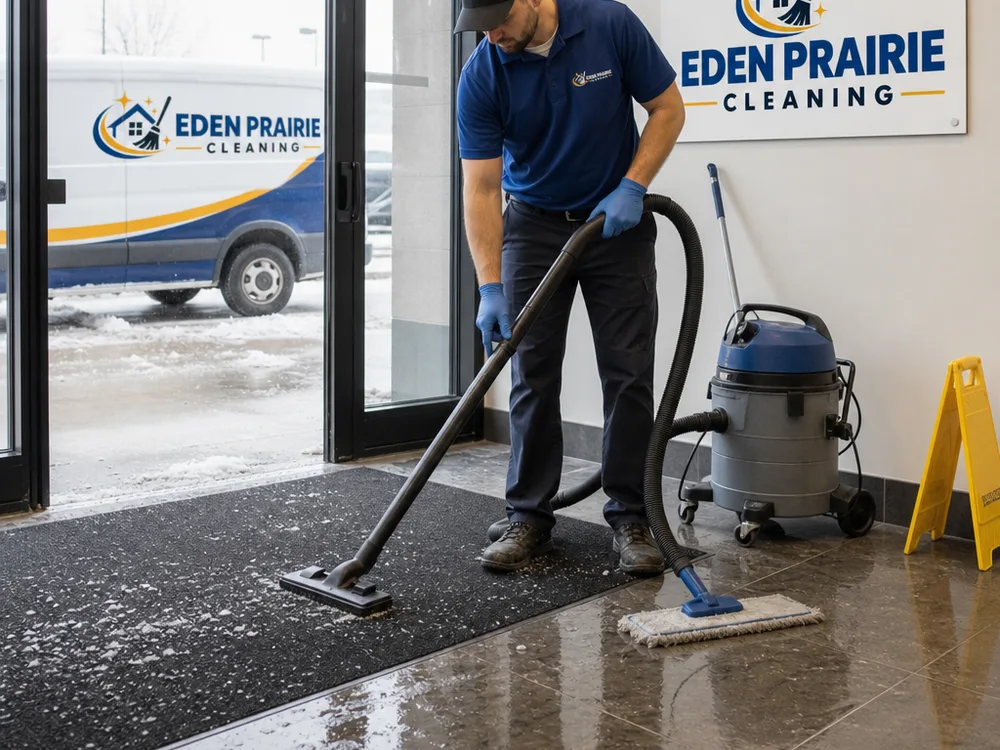
Usage in a Minnesota gym is seasonal in a way few buildings are. The coldest months are the busiest, so peak membership traffic lands exactly when the entry is taking the most salt and meltwater, and the floor just inside the door is both the dirtiest surface and the first one members see.

Humidity swings compound it. In winter a warm, busy room against cold glass puts condensation on windows and mirrors, and in summer the air itself holds moisture so nothing dries quickly. Both ends of the year slow drying times, which is the main reason locker room odor returns in some facilities.

We build your scope around how people move through the space:

  • Entry points: where dirt actually comes in, and what flooring is there.
  • Restroom utilization: number of stalls, number of users, and peak times.
  • Conference rooms: turnover frequency and reset needs.
  • Waste streams: landfill, recycling, and any special handling your building requires.

If you need Janitorial Eden Prairie service that stays consistent, the biggest improvement usually comes from tightening the scope so every cleaner knows exactly what “done” means for your suite.

Two uniformed Eden Prairie Cleaning staff reviewing a checklist and supplies

Fitting your hours

How we schedule around your hours

  1. 01

    Map the day by actual traffic

    We look at when the floor is busy, when classes run, and whether there is a genuine overnight gap. A facility with a 5am open and a 10pm close needs a different plan from one that closes at eight, and both differ from a 24-hour building.

  2. 02

    Inventory the equipment and the materials

    Machine count, upholstery type, mat and turf surfaces, flooring material, and the manufacturer guidance on what may be used on each. The wrong product on rubber or upholstery causes damage you will be looking at for years.

  3. 03

    Build a daily core and a rotation

    Contact points, locker rooms, restrooms, floors, and waste every visit. Under-equipment zones, grout work, mat deep cleaning, and high surfaces on a named rotation, so every part of the building is reached on a known cycle.

  4. 04

    Check the result by smell, not by list

    We walk the locker rooms and studios after the first weeks and judge by what the room is like to stand in. If odor persists, we move time toward the reservoirs rather than add fragrance over the top of it.

What a gym quote includes

How Much Does Gym Cleaning Cost in Eden Prairie?

The drivers are the floor area, how many pieces of equipment need contact-point attention, locker room and shower fixture counts, how many studios and how often they turn over, membership volume, and how many visits a week you need. A facility that never closes costs differently from one with an overnight window, since zoned daytime work takes longer. We quote after walking the building during a busy hour.

Final pricing depends on square footage, number of restrooms, floor types such as carpet versus hard surface, breakroom needs, after-hours access requirements, and how much detail work you want each visit. Exact cost is confirmed after a walkthrough and written scope.

Studio owner questions

Studio owners and gym operators ask us

We put out wipes for members. Why is that not enough?+

Because member wiping is inconsistent and only ever reaches the top of a seat pad or a grip. It does nothing for the underside of a bench, the seam in upholstery, the frame, the floor beneath a machine, or a shower grout line, and those are the places odor actually lives. Member wipes are a useful supplement to a cleaning program, not a replacement for one.

Our locker room smells even after cleaning. What is going on?+

Almost always a reservoir plus slow drying. Grout, drain surrounds, the underside of benches, locker interiors, and the floor-to-wall junction hold residue that a surface pass does not remove, and a humid room never fully dries between sessions. The fix is agitation and dwell time on those specific surfaces, plus honesty about whether ventilation is the limiting factor.

We are open twenty-four hours. Can you still work?+

Yes, with a zoned plan instead of one pass. Studios get cleaned between classes, the main floor in the quiet stretches your traffic data shows, and locker rooms on a set cycle at the lowest-use hours. It takes longer than an empty building would, and members generally take visible cleaning as a good sign rather than an intrusion.

Will your products damage our upholstery or rubber flooring?+

Not if we start from the manufacturer guidance, which is why we ask for it before quoting. Some disinfectants crack vinyl upholstery over months, and some degrade rubber flooring and leave it tacky. We record what each surface allows, test anything new out of sight, and would rather use a slower compatible product than a fast one that ruins a floor.

Who handles the mats, us or you?+

Either, as long as it is written down. Many studios wipe mats between classes themselves and have us do the periodic proper clean, which is the arrangement that works best. What fails is assuming someone else is doing it, because mats absorb more than any other surface in a studio and show it within weeks.

January triples our traffic. Does the schedule change?+

It should, and planning it in the fall is better than reacting in week two. More frequency on locker rooms, entries, and contact points through the busiest months, then back down in spring. The entry zone is the one most operators underestimate, since peak traffic and the worst winter conditions arrive in the same weeks.

Talk about your facility

Want members to stop noticing the smell?

Tell us your floor area, roughly how much equipment you have, your locker room setup, and your opening hours. We will walk it during a busy stretch and build a plan around your real traffic rather than an empty building.

Request a quote

Tell us about your space

Send the details and we will come back with a written scope and a clear plan.