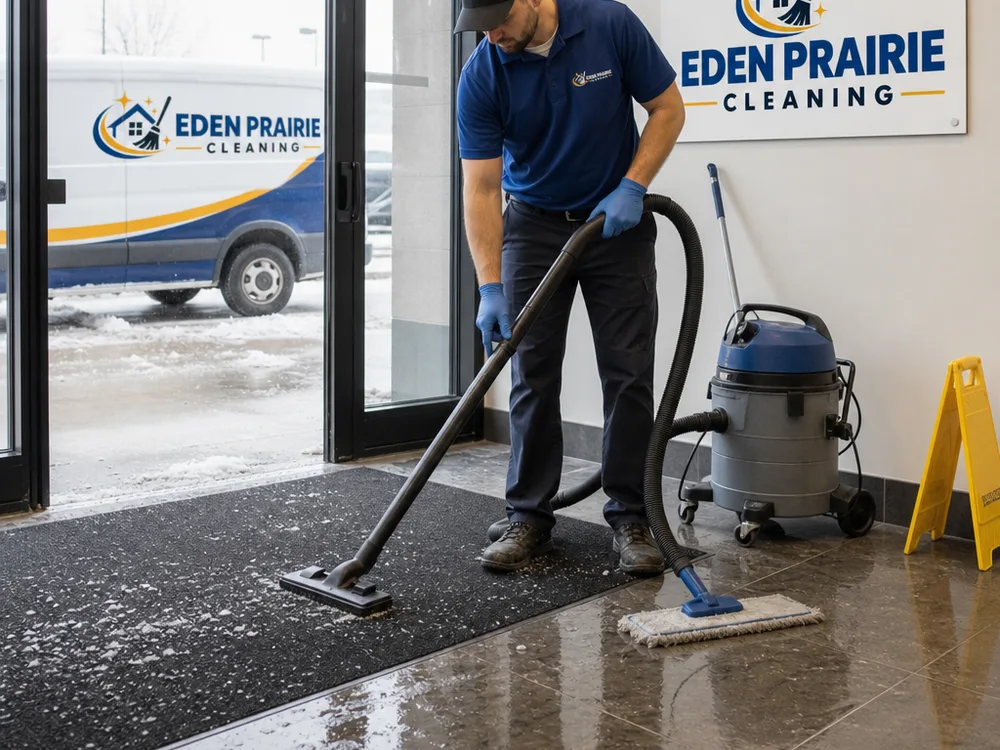
Technician cleaning commercial entry matting and a lobby floor affected by winter salt

Clinics and dental practices

Medical & Dental Office Cleaning, Eden Prairie

A practice gets cleaned to a standard patients notice and regulators expect. We work to your written protocols, in the zones you assign us, on the schedule your appointment book allows.

✓Written scopes ✓Documented tasks ✓Flexible scheduling ✓Ongoing quality checks

Zones, turnover, and protocol

Your protocols set the standard and we work inside them

Every practice already has infection control rules, a product list, and a line between what clinical staff do and what a cleaning contractor does. Our job is to fit inside that rather than arrive with our own version of it. The first conversation is about where your protocol stops and our scope begins.

Regulated waste and clinical disinfection of treatment surfaces stay with your staff. We do not handle sharps, biohazard containers, or anything requiring a credential we have not claimed. What we take on is the building around the care: waiting areas, corridors, restrooms, offices, floors, glass, and the non-clinical surfaces you assign.

  • Consistency: the same scope, the same standards, and documented tasks.
  • Practical scheduling: after-hours, early morning, or daytime touch-ups where appropriate.
  • Building-ready cleaning: methods and products suited for common office finishes like LVT, VCT, carpet tile, glass, stainless, and painted drywall.

Timing is the other constraint. A practice runs on a booked schedule with no slack, so cleaning happens before the first patient, after the last one, or in a defined midday gap. The schedule has to be reliable, because a crew arriving mid-clinic is a problem rather than a service.

For a broader look at what we do across properties beyond office spaces, review our cleaning services in Eden Prairie.

Zones, turnover, and protocol

Your protocols set the standard and we work inside them

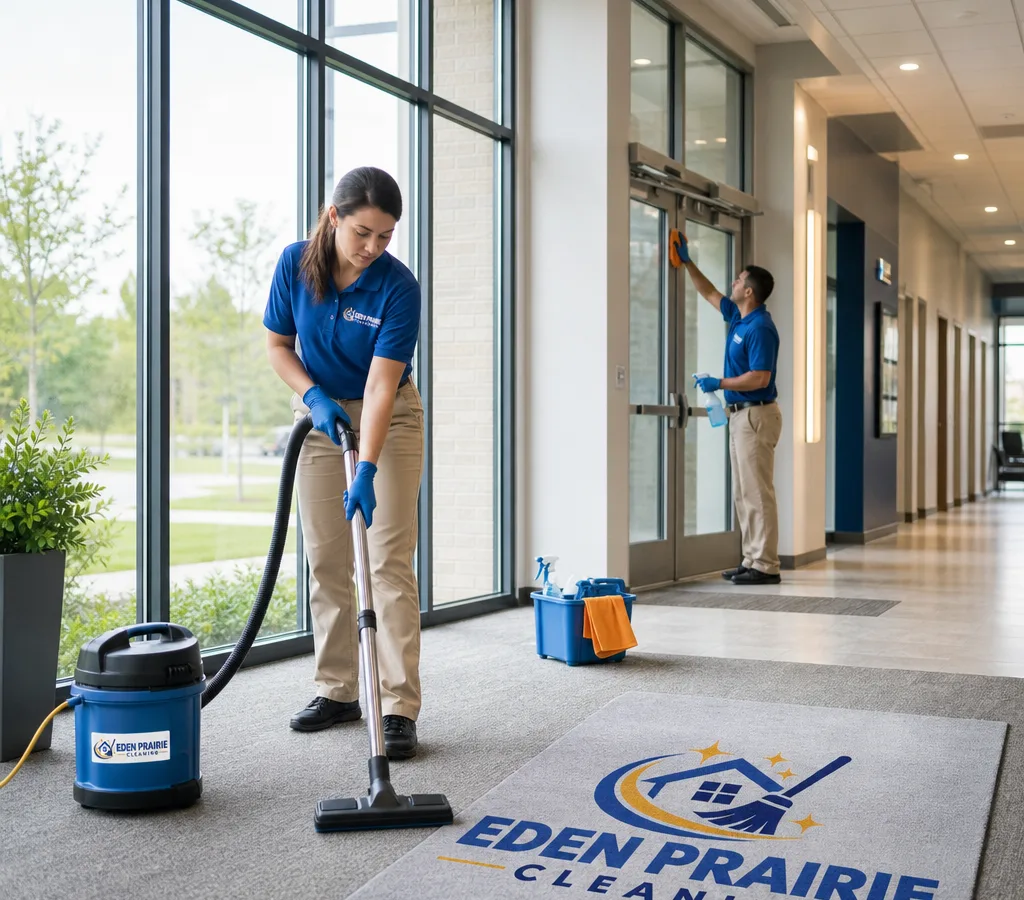
Waiting rooms carry the heaviest traffic

Chairs and armrests, the check-in counter, door handles, light switches, children's areas if you have one, and the floor around the entry. This is the room where unwell people sit and the room every patient judges, so it earns frequency over anything else.

Hand-contact surfaces on a named list

Door levers, push plates, handrails, switch plates, counter edges, chair arms, and the fronts of reception glass. We work from a written list of these rather than a general instruction, because the point is that nothing on it gets skipped on a busy night.

Clinical and non-clinical zones drawn clearly

Your protocol says who cleans a treatment surface, a chair, and an instrument area. We clean the floors, the non-clinical surfaces, and the room around it, and we stay off everything you have reserved for staff. The map gets written down and shared.

Restrooms, including patient-use rooms

Specimen and patient restrooms take more traffic per fixture than a staff restroom and show it. Fixtures, the floor around the base of each one, dispensers looked at every visit, and the touch surfaces on the way in and out, with your products where your protocol names one.

Floors in corridors and treatment areas

Hard floors in clinical corridors are usually a sealed or welded sheet surface that needs a method suited to its finish, not a general mop routine. We confirm the flooring with you, use what the manufacturer and your protocol allow, and keep traffic lanes dry.

Your products and your documentation

Many practices specify the disinfectant and the contact time, and some need a record of what was cleaned and when. We work to your product list where you have one, and keep the simple log your own inspections or accreditation process asks you to produce.

Local patient traffic and seasons

Minnesota illness season changes the frequency

From late fall through early spring a waiting room fills with respiratory patients and the hand-contact surfaces turn over constantly. Practices that hold the same schedule year round tend to feel behind in January, so the sensible pattern is a heavier touch-surface cycle through those months and a lighter one in summer.

The parking lot shows up indoors as well. Salt and melt residue tracked across a clinical corridor is abrasive and visible on a light sheet floor, and the entry is where it all lands. Longer matting, more entry attention, and a dry-floor habit through the winter prevent both the look and the slip risk.

We build your scope around how people move through the space:

  • Entry points: where dirt actually comes in, and what flooring is there.
  • Restroom utilization: number of stalls, number of users, and peak times.
  • Conference rooms: turnover frequency and reset needs.
  • Waste streams: landfill, recycling, and any special handling your building requires.

If you need Janitorial Eden Prairie service that stays consistent, the biggest improvement usually comes from tightening the scope so every cleaner knows exactly what “done” means for your suite.

Two uniformed Eden Prairie Cleaning staff reviewing a checklist and supplies

How we set up a practice

How service in a practice gets agreed

  1. 01

    Read your protocol before we quote

    We ask for your infection control document, your product list if you specify one, and your zone boundaries. Quoting a practice without reading those produces a scope that staff have to correct in the first week.

  2. 02

    Walk the floor plan room by room

    Treatment rooms, corridors, waiting areas, restrooms, labs, offices, and storage, marked as ours, yours, or shared. Floor types and fixture counts get recorded at the same time, along with anything we are not to enter.

  3. 03

    Fit the visit to the appointment book

    Before opening, after closing, or a defined gap, with a fixed arrival window rather than an approximate one. We also agree what happens when the clinic runs late, because that is the situation that tests the arrangement.

  4. 04

    Start, log it, and review with your staff

    The first visits get checked against the written zones and the touch-surface list. Your staff notice a gap before anyone else does, so we set up a simple way for them to report it and we confirm the correction.

What a practice quote rests on

How Much Does Medical Office Cleaning Cost in Eden Prairie?

The inputs are the number of treatment rooms, how many patients pass through on a normal day, restroom fixture count, the flooring mix in clinical areas, how often you want touch surfaces covered, and how many visits a week the appointment book allows. Protocol requirements such as a specified product, a contact time, or a log add time per room. We quote after reading your protocol and walking the plan.

Final pricing depends on square footage, number of restrooms, floor types such as carpet versus hard surface, breakroom needs, after-hours access requirements, and how much detail work you want each visit. Exact cost is confirmed after a walkthrough and written scope.

Practice manager questions

What practice managers check before signing

Do you handle medical waste or biohazard containers?+

No. Sharps, regulated medical waste, and biohazard containers stay with your staff and your licensed waste contractor, and we will not take them on. Our scope is the non-clinical side: ordinary waste, floors, waiting and office areas, restrooms, glass, and the hand-contact surfaces you assign to us in writing.

Are your staff trained for a clinical environment?+

We will not claim a credential we do not hold, and you should be wary of any contractor who does. What we do is work to your documented protocol: your zone map, your product list, your contact times, and your reporting. If your accreditation or insurer requires specific contractor training, tell us what it specifies and we will say plainly whether we can meet it.

Who cleans the treatment chairs and counters?+

Your clinical staff, in every arrangement we would recommend. Between-patient disinfection of a treatment surface is clinical work tied to your protocol and your liability. We clean the room around it: floors, non-clinical surfaces, waste, the sink cabinet exterior, and the door and switch contacts, so your clinical team only has to cover clinical surfaces.

Can anyone be in the building while patients are present?+

Only if you want that, and most practices do not. The standard pattern is after the last appointment or before the first, with no crew on the floor during clinic hours. Where a midday restroom check or a waiting room reset genuinely helps, we schedule it as a short defined visit and your front desk knows exactly when to expect it.

We specify our own disinfectant. Will you use it?+

Yes, and it is the easier arrangement for both sides. If you supply the product we use it as directed, including the contact time your protocol sets, which does change how long a room takes. Where you would rather we supply, send the specification you need matched and we will confirm what we can bring before anything starts.

Our dental practice has a lab area. Is that in scope?+

Partly, and the boundary needs drawing on your floor plan rather than in a phone call. Bench surfaces, equipment, and anything holding materials or instruments stay with your team. The floor, the waste, the sink exterior, and the general surfaces around the working area can be ours. Ambiguity in a lab is where contractor cleaning goes wrong.

Talk to us about your practice

Need a cleaner that works to your protocol?

Send us your zone boundaries, your product list if you have one, and the hours your appointment book leaves open. We will walk the floor plan, mark what is ours and what stays with your staff, and quote from that.

Request a quote

Tell us about your space

Send the details and we will come back with a written scope and a clear plan.