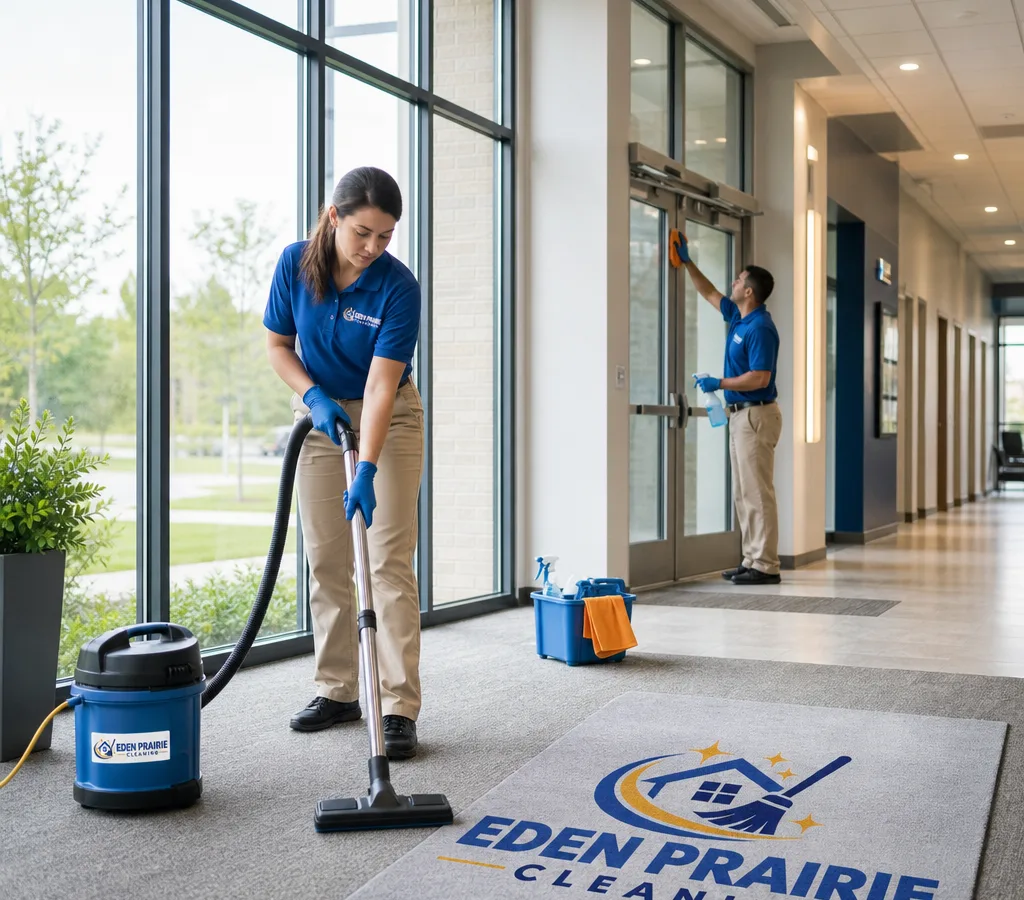
Professional cleaning in a modern Eden Prairie office lobby and corridor

Office buildings in Eden Prairie

Office Building Cleaning in Eden Prairie

Your building decides most of the plan: who controls the corridors, when a crew can be inside, and which spaces have to look right before the first meeting of the day.

✓Written scopes ✓Documented tasks ✓Flexible scheduling ✓Ongoing quality checks

Tenancy, access, and traffic

Who controls the building changes how it gets cleaned

The first question about an office is not what needs cleaning, it is who decides. In a single-tenant building you set the hours, the access, and the standard. In a multi-tenant suite the landlord already cleans the corridors, the restrooms may be shared, and your scope starts at your own door.

Occupancy patterns matter more than floor area. A suite where half the staff work from home two days a week does not soil at the rate the square footage suggests, and the rooms that do get used, the conference room and the break area, cycle several times a day.

  • Consistency: the same scope, the same standards, and documented tasks.
  • Practical scheduling: after-hours, early morning, or daytime touch-ups where appropriate.
  • Building-ready cleaning: methods and products suited for common office finishes like LVT, VCT, carpet tile, glass, stainless, and painted drywall.

Offices are also judged in a few square feet. A client forms an impression in the lobby, at the door glass, and in the restroom they visit before a meeting. Those spaces earn more frequency than their size suggests, while a quiet row of private offices can sit on a longer cycle.

For a broader look at what we do across properties beyond office spaces, review our cleaning services in Eden Prairie.

Tenancy, access, and traffic

Who controls the building changes how it gets cleaned

Conference rooms between bookings

A room used four times a day needs resetting, not deep cleaning: table wiped, chairs straightened, whiteboard trays cleared, remnants of lunch removed, and the floor checked. We set a reset standard so the next meeting starts in a room that looks unused.

Break areas and the shared refrigerator

Counters, sink, tables, exterior appliance surfaces, and the microwave inside and out. The refrigerator interior is a recurring argument in every office, so we agree up front whether it is in scope and on what cycle, then hold to it.

Desks, keyboards, and the no-touch line

Dusting a desk means moving someone's things, so the boundary gets written down: reachable surfaces only, papers untouched, personal items left alone, screens and keyboards in or out by your choice. Clear rules prevent a complaint every week.

Lobby, door glass, and first impressions

Entry mats, lobby floor, reception surfaces, and door glass at hand height carry the whole visitor impression and show every fingerprint. These get attention on every visit regardless of what else sits on the rotation that night.

Restrooms on a traffic cycle

Frequency comes from how many people use them, not from how many rooms there are. Dispensers get looked at each visit instead of waiting for a report, and the floor at the base of each fixture gets the attention a quick mop skips.

After-hours access the building allows

Fob or key handling, the alarm sequence, which lights stay on, elevator rules after a certain hour, and the tenant spaces we must not enter. We get this from your property manager before the first visit rather than on the night.

What an Eden Prairie office faces

Suburban office parks bring their own cleaning problems

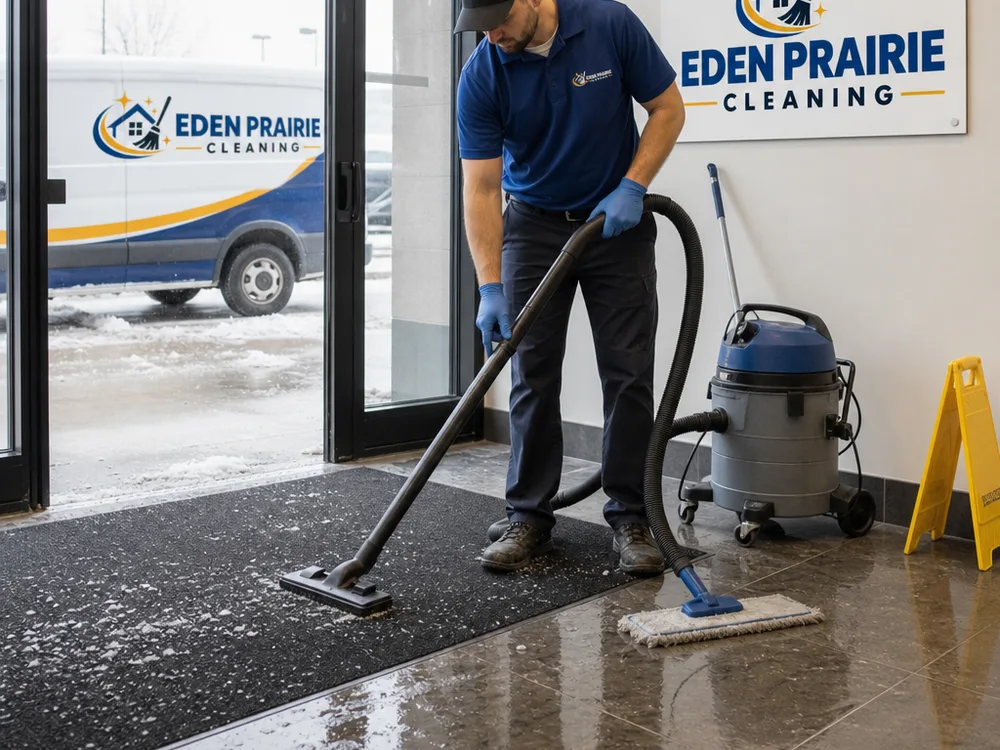
Most offices here sit in suburban parks where everyone drives, so the parking lot comes indoors. Through the salted months the entry carpet fills with grit that grinds into the fiber and travels down the corridor, which is why matting and entry vacuuming matter more than any other single task.

The week has a shape too. Monday mornings reveal whatever sat over the weekend, Friday afternoons are quiet, and the middle of the week carries the meetings and the visitors. Scheduling heavier tasks against that rhythm gets better results than spreading the same effort evenly across five nights.

We build your scope around how people move through the space:

  • Entry points: where dirt actually comes in, and what flooring is there.
  • Restroom utilization: number of stalls, number of users, and peak times.
  • Conference rooms: turnover frequency and reset needs.
  • Waste streams: landfill, recycling, and any special handling your building requires.

If you need Janitorial Eden Prairie service that stays consistent, the biggest improvement usually comes from tightening the scope so every cleaner knows exactly what “done” means for your suite.

Technician cleaning commercial entry matting and a lobby floor affected by winter salt

Getting started in your building

How office service gets set up

  1. 01

    Start with the lease and the landlord

    We check what the building already provides: corridor and restroom cleaning, waste removal, window service. There is no point pricing work the landlord is already doing, and no point assuming it is covered when it is not.

  2. 02

    Count fixtures, rooms, and real occupancy

    Headcount on site rather than on payroll, conference bookings per week, restroom fixtures, floor types, and the kitchen setup. Those numbers decide frequency far better than the square footage on the lease does.

  3. 03

    Write the boundaries before the first night

    Desk policy, no-entry rooms, server and storage areas, refrigerator scope, and what happens to anything left in a conference room. Written boundaries are what keep an office arrangement calm after the first month.

  4. 04

    Run it, then adjust to how the office is used

    The first weeks show which rooms actually get used and which sit idle. We move frequency toward the heavy spaces and off the quiet ones rather than holding an even schedule that fits nobody.

What shapes an office quote

How Much Does Office Cleaning Cost in Eden Prairie?

An office quote is built from the hours a visit takes and the number of visits, so the inputs are the space you actually occupy, how many people are on site on a normal day, restroom fixture count, how many conference rooms and how often they turn over, the flooring mix, and whether the landlord already covers corridors and shared restrooms. We give you a figure after walking the suite.

Final pricing depends on square footage, number of restrooms, floor types such as carpet versus hard surface, breakroom needs, after-hours access requirements, and how much detail work you want each visit. Exact cost is confirmed after a walkthrough and written scope.

Questions office managers ask

Office managers usually start with these

Our building already has cleaners. What would you be doing?+

In a multi-tenant building the landlord's contract usually covers lobbies, corridors, and shared restrooms, and stops at your suite door. Inside the suite is yours to arrange: offices, conference rooms, the break area, and often a private restroom. Ask your property manager for their scope in writing, then we price only what is genuinely missing.

Can the work happen while staff are in the office?+

It can, and daytime service suits some tenants, especially where a building restricts after-hours access. The trade-off is noise and interruption, so vacuuming and floor work get scheduled around meetings rather than during them. Most offices prefer an evening visit for the main work with an optional daytime touch on restrooms and the break area.

Will anyone touch the papers on our desks?+

Not unless you ask for it. The common arrangement is reachable surfaces only: we clean around what is on a desk, dust what is clear, and leave documents, folders, and personal items exactly where they are. If you want desks fully dusted, the usual approach is a clear-desk night once a week that staff know about in advance.

Nobody comes in Mondays or Fridays. Does five nights make sense?+

Usually not. A hybrid office soils in bursts, so three nights aligned to the days people are in often beats five thin visits. Restrooms and the break area are the exception, because they get used whenever anybody is in the building. We would look at your badge or booking data if you have it, and set frequency to that rather than to habit.

We are moving into a larger suite. When should cleaning start?+

Before the furniture arrives if the space has been empty or recently built out, because a vacant suite collects dust and a fresh build-out leaves fine particles in every track and on every shelf. A one-time clean before move-in and then a regular schedule from the first week of occupancy avoids a complaint in month one.

Our lobby looks tired by Wednesday. What changes that?+

Almost always matting and entry frequency rather than more product. Grit tracked from the parking lot is abrasive, so it dulls a lobby floor and marks the carpet within a day or two. More entry vacuuming, a longer matting run, and attention to door glass at hand height change the impression more than anything done at the far end of the suite.

Set up your office service

Want your office handled around how you work?

Tell us the suite size, how many people are in on a typical day, and what your landlord already covers. We will walk the space, write the boundaries, and set a frequency that matches how the office is actually used.

Request a quote

Tell us about your space

Send the details and we will come back with a written scope and a clear plan.