Professional cleaning in a modern Eden Prairie office lobby and corridor

Warehouses and light industrial

Warehouse & Light Industrial Cleaning

A lot of square footage, not many people, and two standards in one building: a shop floor measured by safety and dust, and offices measured like any office.

✓Written scopes ✓Documented tasks ✓Flexible scheduling ✓Ongoing quality checks

Area, dust, and lanes

Large floor area with low occupancy changes everything

An industrial building breaks the usual relationship between size and soiling. A hundred thousand square feet with twenty people on site does not get dirty the way an office of the same footprint would, but the dirt it does get is heavier: grit from the dock, dust from the process, tire marks from equipment, and whatever the weather brought in on a trailer.

What matters most is where the work is concentrated. Dock areas, the main travel aisles, the floor around any equipment generating dust, and the transition into the office space account for most of the real need. Open storage areas with pallets and little traffic need far less than their area suggests.

  • Consistency: the same scope, the same standards, and documented tasks.
  • Practical scheduling: after-hours, early morning, or daytime touch-ups where appropriate.
  • Building-ready cleaning: methods and products suited for common office finishes like LVT, VCT, carpet tile, glass, stainless, and painted drywall.

The second standard sits upstairs or behind a door. Mezzanine and front offices, a break room, and restrooms serving shift staff get judged by ordinary office expectations, even though they are attached to a shop floor. Running one scope across both always shortchanges one of them.

For a broader look at what we do across properties beyond office spaces, review our cleaning services in Eden Prairie.

Area, dust, and lanes

Large floor area with low occupancy changes everything

Dock areas and the grit they bring

Dock floors, the aprons, the threshold at each door, and the aisle leading away from them take everything a trailer and the weather carry in. This is the highest-value area on an industrial floor and the one most often left to an occasional sweep.

Travel aisles and safety lane markings

Main aisles and the painted lanes and hatching that mark them, kept clean enough that the markings are actually visible. Faded or dust-covered floor marking is a safety issue, and cleaning is what keeps it readable between repaintings.

Dust control on surfaces and at height

Horizontal surfaces, racking beams, ledges, electrical and conduit runs where reachable, and the areas around any process generating dust. Dust at height falls eventually, so reaching it on a rotation keeps the floor-level result from being undone.

Mezzanine and front offices

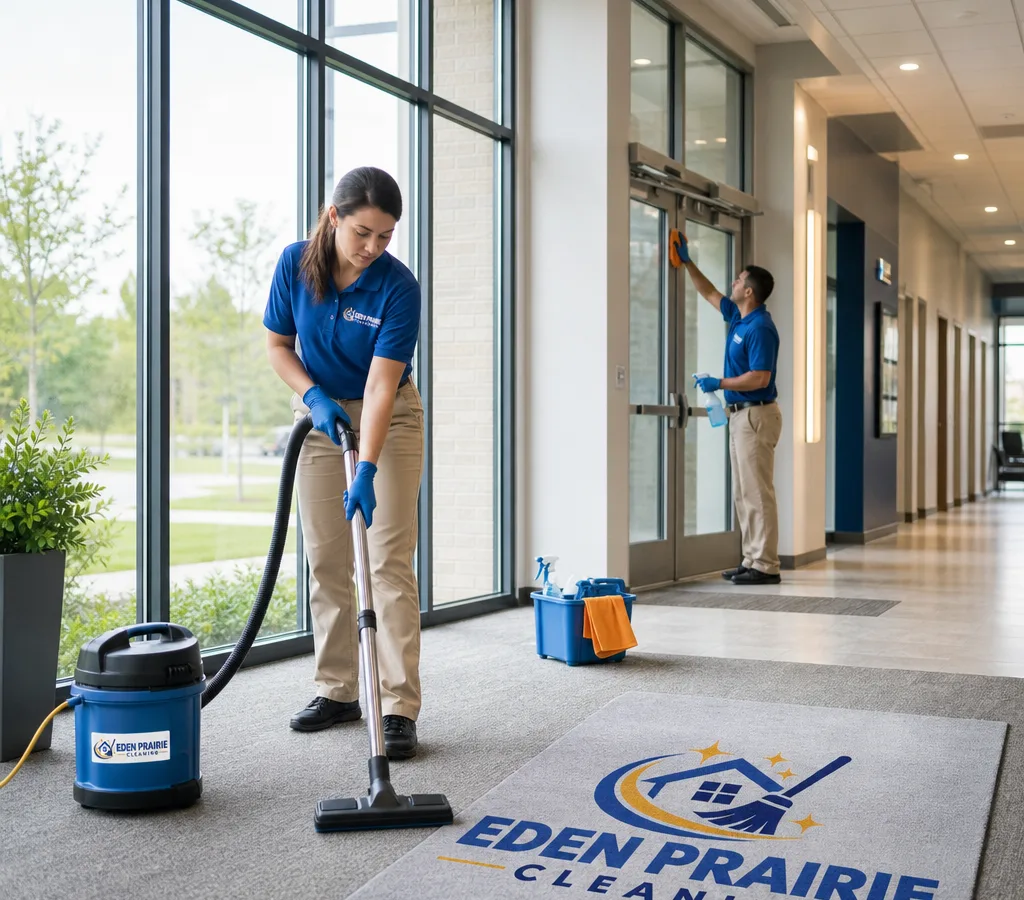
Offices attached to a shop floor still need an office standard: desks and reachable surfaces, floors, glass, waste, and the break area. The difference is what arrives on shoes from the floor outside, which means entry attention at every door.

Restrooms and break rooms for shift staff

Shift use concentrates traffic into short windows, so fixture count and shift pattern set the frequency rather than headcount alone. Break rooms attached to industrial space also take more floor soiling than an office break room does.

A clear boundary around production

Machinery, tooling, work in progress, stock, and anything requiring a lockout procedure are outside our scope. We clean the floor and the areas around them to a line you draw, and we do not touch equipment surfaces unless you specifically scope and authorize it.

Eden Prairie industrial parks

Dock doors, winter weather, and spring thaw

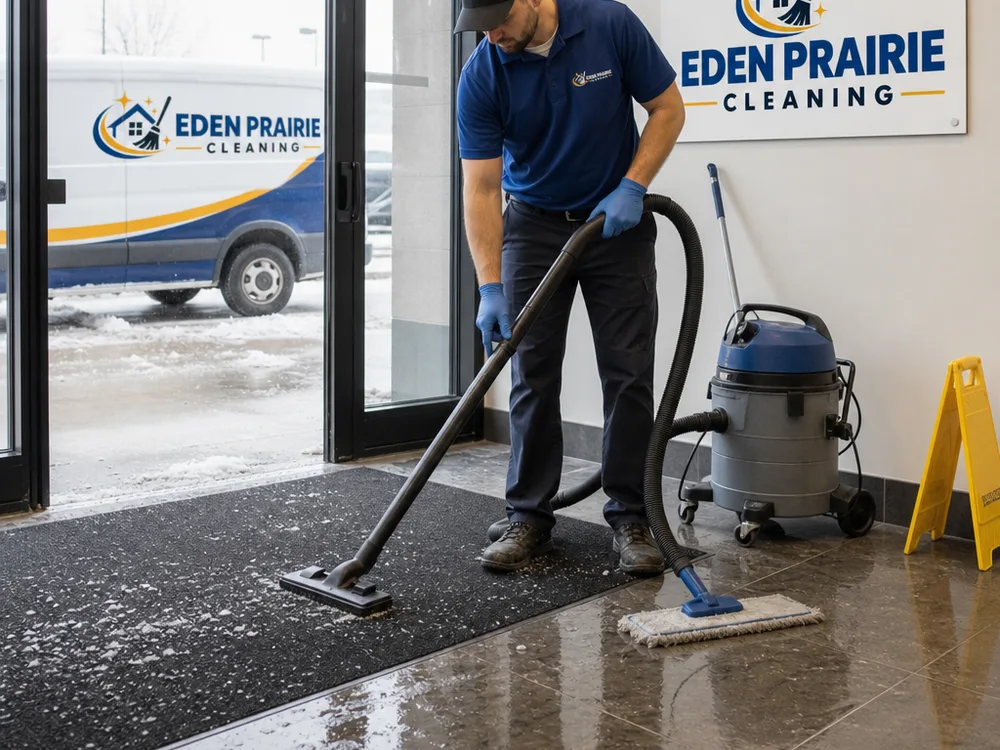
Eden Prairie has a real stock of light industrial and warehouse space alongside its office parks, and in that kind of building the dock doors are the weak point every winter. Salt, sand, and slush come in on trailers and forklifts, melt on a sealed concrete floor, and leave a white residue that spreads down the aisles on tires.

Spring is the other pressure point. Thaw brings mud and standing water through the same doors, and the first warm weeks put pollen on every horizontal surface in a building that is open to the outside several times an hour. Both seasons argue for dock and aisle frequency over uniform coverage of the whole floor.

We build your scope around how people move through the space:

  • Entry points: where dirt actually comes in, and what flooring is there.
  • Restroom utilization: number of stalls, number of users, and peak times.
  • Conference rooms: turnover frequency and reset needs.
  • Waste streams: landfill, recycling, and any special handling your building requires.

If you need Janitorial Eden Prairie service that stays consistent, the biggest improvement usually comes from tightening the scope so every cleaner knows exactly what “done” means for your suite.

Two uniformed Eden Prairie Cleaning staff reviewing a checklist and supplies

Scoping a large floor

How we scope an industrial building

  1. 01

    Measure cleanable area, not building area

    Racked storage, blocked areas, and space under fixed equipment are not cleanable floor. We measure what can actually be worked and price from that, which is usually a fraction of the gross square footage on a lease.

  2. 02

    Zone the building by real activity

    Docks, main aisles, equipment areas, open storage, offices, break rooms, and restrooms, each with its own frequency. A zoned plan puts the hours where the traffic is instead of spreading them evenly across an enormous floor.

  3. 03

    Agree the safety and access requirements

    Your site rules, required protective equipment, forklift and pedestrian traffic patterns, lockout boundaries, and which areas need an escort or a specific induction. We work to your requirements rather than bringing our own version.

  4. 04

    Fit the shift pattern, then review

    Work goes into the gaps your shifts leave, whether that is a night, a weekend, or a changeover window. After the first weeks we move frequency toward the zones that are losing, usually docks and the aisle nearest them.

What an industrial quote uses

How Much Does Warehouse Cleaning Cost in Eden Prairie?

Pricing comes from cleanable floor area rather than gross building area, how many dock doors you run, the office and break room space attached, restroom fixtures and shift pattern, the dust load your operation produces, and how many visits a week each zone needs. Machine scrubbing a large floor is a separate line, and access requirements affect time. We quote after measuring what is workable.

Final pricing depends on square footage, number of restrooms, floor types such as carpet versus hard surface, breakroom needs, after-hours access requirements, and how much detail work you want each visit. Exact cost is confirmed after a walkthrough and written scope.

Warehouse supervisor questions

Warehouse supervisors want to know this

We have a hundred thousand square feet. Does that mean a huge bill?+

Not if it is priced properly. Cleanable area is what counts, and in a warehouse much of the footprint is racked, blocked, or under fixed equipment, so the workable floor is often a fraction of the lease figure. We measure it rather than apply a rate to the gross area, which is the main reason industrial quotes vary so widely between contractors.

Our floor markings have faded. Is that a cleaning problem?+

Partly, and it is worth separating the two causes. Marking covered in dust and tire residue reads as faded when it is actually just dirty, and cleaning restores it. Marking that is genuinely worn through needs repainting, which is a different trade. We will tell you which one you are looking at rather than cleaning the same aisle repeatedly to no effect.

Can anyone work while forklifts are running?+

Only in zones you have separated, and often the honest answer is no. Mixing pedestrian cleaning work with live forklift traffic is a risk nobody should accept casually, so the usual arrangement is a shift gap, a weekend, or a zone taken out of use while we are in it. We work to your traffic rules, and if the only safe answer is after hours, that is what we quote.

Our offices sit inside the warehouse. One scope or two?+

Two, with different frequencies. Office and break areas need an ordinary office standard, and they also need entry attention at every door onto the shop floor, because that is how grit and dust arrive. A single site-wide scope almost always means the offices get industrial-grade attention and the complaints start there.

We make dust all day. Is routine cleaning even worth it?+

Yes, but the plan has to be shaped around the source rather than the whole building. That means frequent work close to the process and on the surfaces it loads, plus periodic attention at height so settled dust is not continually falling onto a clean floor. Where containment or extraction is the real answer, we will say so instead of selling you more visits.

Do you machine scrub, or is this sweeping?+

Both, and they belong on different frequencies. Routine work is sweeping, spot cleaning, dock and aisle attention, and the offices. Machine scrubbing a large sealed or coated floor is a separate scheduled job, usually periodic rather than weekly, and it is priced on its own because the time and equipment are different.

Scope your building

Want the docks and aisles under control?

Tell us the building size, how many dock doors you run, the office space attached, and your shift pattern. We will walk it, measure the floor that can actually be cleaned, and zone the plan around where the traffic really is.

Request a quote

Tell us about your space

Send the details and we will come back with a written scope and a clear plan.