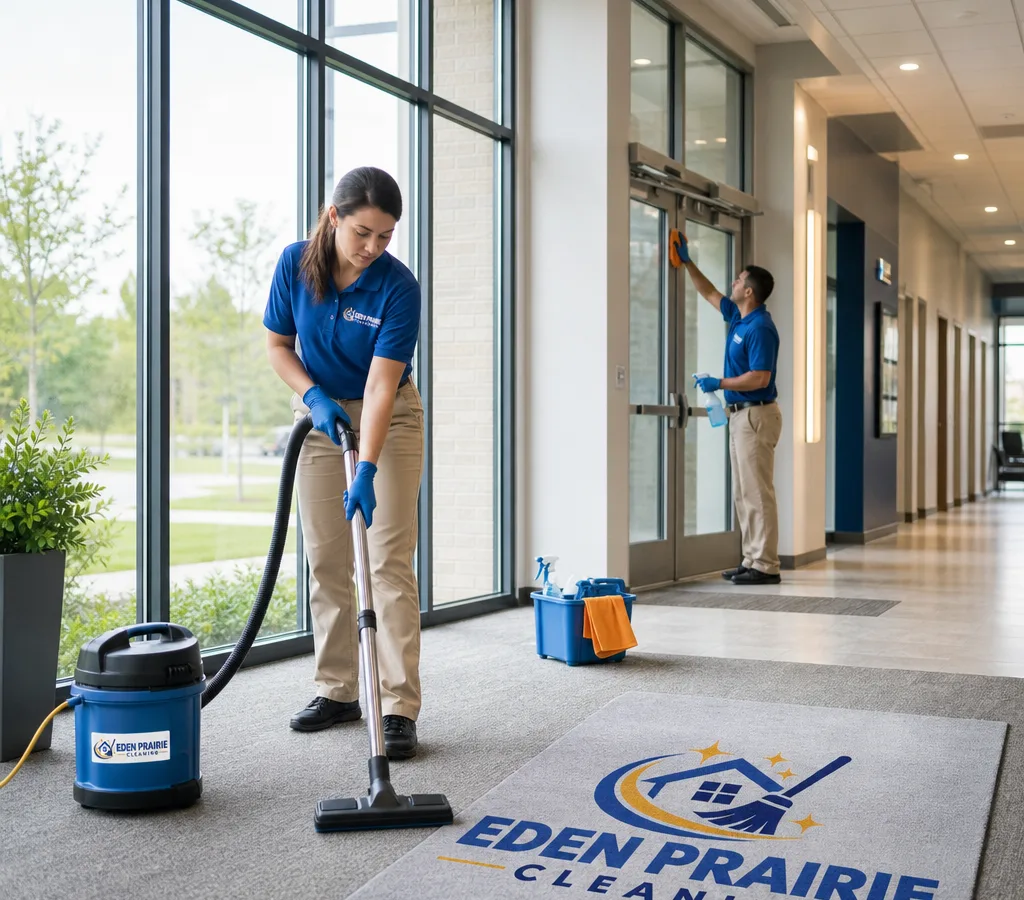
Technician cleaning commercial entry matting and a lobby floor affected by winter salt

Restaurants and food service

Restaurant & Food Service Cleaning

Two buildings share one address: a dining room guests judge in seconds and a kitchen judged by an inspector. Each needs a different method and a different hour of the day.

✓Written scopes ✓Documented tasks ✓Flexible scheduling ✓Ongoing quality checks

Front of house, back of house

A kitchen and a dining room are not one job

The boundary between front and back runs through every decision here. Out front the work is appearance and turnover: tables, floors, glass, restrooms, and the details a guest notices while waiting. In the kitchen it is grease, floor safety, and keeping surfaces in the state an inspector expects to find them.

Your own staff already handle a closing routine, and a contractor who ignores that creates duplicated effort and arguments. We start by reading your close list, then take the tasks that genuinely benefit from someone arriving after the kitchen is cold, and leave the rest with your team.

  • Consistency: the same scope, the same standards, and documented tasks.
  • Practical scheduling: after-hours, early morning, or daytime touch-ups where appropriate.
  • Building-ready cleaning: methods and products suited for common office finishes like LVT, VCT, carpet tile, glass, stainless, and painted drywall.

There are also tasks we will not take. Exhaust hood and duct cleaning and grease trap service belong to contractors licensed for that work, and we do not present ourselves as one. What we do is the dining room, the restrooms, the floors front and back, and the degreasing and detail that sits outside those specialties.

For a broader look at what we do across properties beyond office spaces, review our cleaning services in Eden Prairie.

Front of house, back of house

A kitchen and a dining room are not one job

Dining room reset after close

Tables and bases, chair legs and seat backs, booth seams and the crumbs that live in them, window sills, condiment stations, and the floor cleaned to the wall. The room should read untouched when the first server walks in, not merely wiped.

Kitchen floors and the grease film

Quarry tile, grout lines, and the floor under and behind equipment where the film builds and the slip risk starts. Degreasing with dwell time rather than pressure, then rinsing, because grease pushed around a tile floor is what makes it slick.

Guest restrooms on a short cycle

In food service a restroom is read as evidence about the kitchen. Fixtures, the floor to the wall junction, mirrors, dispensers checked before they empty, door and stall contacts, and an honest look at the exhaust grille every visit.

Hard surfaces and splash zones

Wall surfaces behind prep and cook lines, equipment exteriors, the legs and casters that hold a season of spills, trash corral areas, and the dish pit surround. These are the surfaces an inspection photograph tends to find.

Entry, patio, and the trash corral

Entry glass and matting, the first few feet of floor, and in season the patio surfaces and furniture. The waste area gets attention too, since a corral that is never cleaned becomes an odor and pest problem that reaches the dining room.

What we leave to licensed specialists

Hood and duct interiors, grease trap pumping, and fire suppression service belong to contractors certified for them. We tell you plainly what is outside our scope and we work around their visits instead of overlapping with them.

A Minnesota service calendar

Winter entries and summer patios move the work

Through the salted months a restaurant entry takes a punishing amount of grit and meltwater, and in a dining room with hard floors it tracks to the first four tables and stays visible all service. Longer matting and more frequent attention to that zone matter more than anything done at the back of the room.

Patio season flips the problem. Outdoor seating adds surfaces, pollen in late spring, and food debris that draws insects, and humid nights slow every floor down because nothing dries quickly. The sensible pattern is a heavier front of house cycle in summer and a heavier entry cycle in winter.

We build your scope around how people move through the space:

  • Entry points: where dirt actually comes in, and what flooring is there.
  • Restroom utilization: number of stalls, number of users, and peak times.
  • Conference rooms: turnover frequency and reset needs.
  • Waste streams: landfill, recycling, and any special handling your building requires.

If you need Janitorial Eden Prairie service that stays consistent, the biggest improvement usually comes from tightening the scope so every cleaner knows exactly what “done” means for your suite.

Cleaner sanitizing a kitchen counter in a well-lit Eden Prairie home

Fitting into service

How we work around your service hours

  1. 01

    Read your close list first

    We go through what your staff already do at close and what your health inspection process expects. Our scope is then built to fill the gaps rather than repeat work your team has already been doing for years.

  2. 02

    Agree the window and the equipment state

    Arrival after the kitchen is cold and the floor is clear, or before prep starts in the morning. We confirm what is switched off, what must not be moved, and how we get in and secure the building afterward.

  3. 03

    Split the scope front and back

    Two lists with different frequencies and different methods, so dining room appearance and kitchen degreasing are planned separately. Each one names what is excluded, including the specialties that belong to licensed contractors.

  4. 04

    Review it after a week of real service

    Volume tells the truth that a walkthrough cannot. After a full week we move time toward whatever is losing, usually kitchen floors or the entry zone, and confirm with your manager rather than assuming.

What a food service quote weighs

How Much Does Restaurant Cleaning Cost in Eden Prairie?

The drivers are dining room seats and floor area, kitchen size and how much equipment the floor runs under, restroom fixtures, how many nights a week you want covered, and whether patio surfaces are in scope seasonally. Cuisine matters too, since a fryer-heavy kitchen builds film faster than a cold-prep operation. The figure follows a walkthrough after close, when we can see the floor as it really is.

Final pricing depends on square footage, number of restrooms, floor types such as carpet versus hard surface, breakroom needs, after-hours access requirements, and how much detail work you want each visit. Exact cost is confirmed after a walkthrough and written scope.

Kitchen manager questions

Kitchen managers want these answered first

Do you clean the hood and the ductwork?+

No, and you should not hire a general cleaning company for it. Hood and duct interiors require a contractor certified for that work, with documentation your insurer and inspector will ask to see. We clean the hood exterior and the surfaces and floor around the cook line, and we schedule around your hood contractor's visits rather than duplicating them.

Our closing crew already cleans. What is left for you?+

The work a tired closing crew reasonably cannot do: floors degreased with proper dwell time, under and behind equipment, grout, wall surfaces in the splash zones, booth seams, equipment legs and casters, and the detail in restrooms and the dining room. Your team handles nightly food safety tasks; we handle the accumulation those tasks never get to.

How do you keep a tile kitchen floor from staying slippery?+

By removing the film rather than redistributing it, which means a degreaser with time to work, agitation on the grout lines, and a rinse. A quick mop with a dirty solution spreads a thin layer of grease across the whole floor, which is how a clean-looking kitchen stays slick. We also keep the drying stage in the plan, not as an afterthought.

An inspection is coming. Can you get us ready?+

We can do the cleaning side, and we will be straight about the limit: inspections also cover food handling, temperatures, storage, and records, none of which cleaning touches. On our side the useful work is floors under equipment, grout, wall and splash surfaces, restroom detail, waste areas, and the back corners that get overlooked. Tell us the date and we will plan backward from it.

Can anything be done during service hours?+

Front of house, yes, in a limited way: restroom checks, entry matting and glass, and a floor pass in the waiting area. Back of house, no, because a working line cannot accommodate a crew and cleaning around hot equipment is unsafe. Everything kitchen-side happens after close or before prep.

We have a patio for about five months. How does that work?+

As a seasonal addition to the front of house scope with its own frequency, rather than as a line that sits unused all winter. Surfaces, furniture, railings, the floor, and the drains get added when it opens and removed when it closes. Pollen in spring and insects in late summer are what drive the frequency, so it is not even across the season.

Talk to us after close

Need the kitchen floor and dining room handled?

Tell us your seat count, your kitchen setup, and the hours after close that are genuinely free. We will walk it when the floor looks like it really does and split the scope between your team and ours.

Request a quote

Tell us about your space

Send the details and we will come back with a written scope and a clear plan.